This morning, I got up very early to do some timelapse photography of St. Paul's Cathedral and the Millennium Bridge, on the South Bank, in London, UK. As the tide was on its way out, I was able to go down to the shoreline.
I found a compact camera, caked in mud, which had presumably been revealed by the tide going out that morning. It looked a little something like:
It's a Canon PowerShot SX230 HS, and was inside a 'Go Canada' red bag. Neither were water/mud proof, I'm afraid.
After a bit of a clean-up, I was able to open the memory card holder and load-up the photos (well done Sandisk!!), in the hope of identifying the owner. And success - it seems clear this is who it belongs to:
He also has another shot, helpfully showing him holding-up his Boarding Pass to the camera, so I also know his name: REID JANNSEN. And that he came in on an Air Canada flight from Toronto on 8th Jan. From the photos, as the last one is of him near the Millennium Bridge, I can only assume he dropped it there a couple of days ago.
I would be amazed if the camera works again (it's drying out at the moment before I try it), but would be delighted to return it, with the memory card to Reid if we can track him down!
I will e-mail Air Canada to see if they can help out, but otherwise it's over to the power of social media to try and track him down!!!
***UPDATE 1*** - Air Canada have tracked him down and e-mailed, so there's a chance for a reunion...
***UPDATE 2*** - It turns out the photos of Reid were taken by the camera owner, his Aunt. She kindly e-mailed me once Air Canada tracked her down and passed my details on. This evening, I was then able to drop the camera off at their hotel... and have just had an e-mail confirming that they've got the camera back!
I wasn't expecting to ever write about a new camera from Fujifilm, but this one is sure to create a few waves - the new Fujifilm X-Pro1, with high-quality retro design and RAW file support.
Here's a copy of their promotional video which should give you an idea about how it looks (hopefully they diverted the money they saved on producing the music to put into the camera R&D):
The redundancy of optical low-pass filters by using their new X-Trans CMOS sensor will allegedly create a step-change improvement in image quality, so we'll no doubt find out soon in real-world tests if that's the case. Refreshing at least to see some real innovation, rather than incremental tweaks to maintain revenue shares, something which certain other complacent manufacturers have been guilty of...
Today, Canon launched an upgrade to the Powershot G12, with the G1 X. Not just an evolution, it's being pitched as more of a revolution, with a significantly increased sensor size.
Here's a video which describes the camera in some detail:
To-date, my blog has mainly focused on my (relative lack of) success in microstock photography, as well as updates on significant new gear which has been launched. Obviously, the most significant part of photography is actually being 'out there' taking shots, so I thought I'd share updates on this. Even if nobody else reads it, it serves as a bit of a diary for my own use!
Although I'm a member of the Wetlands Trust, I don't often make it down to WWT London (Barnes), but fancied a jaunt yesterday, so gave it a go. Optimistically, I'd set myself up for a fall by tweeting at @UK_Richard that I'd like to see Bittern and Lesser Redpolls.
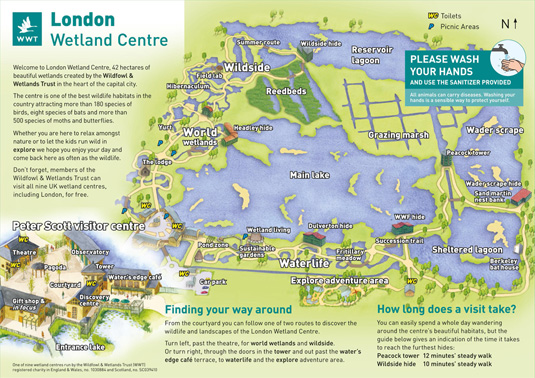
For those haven't visited yet, the London Wetlands Centre is well worth a visit, as it's a bit of an oasis, only 19 minutes by train from Waterloo (then a walk from Barnes station). The site looks a little something like:
It's very well setup for kids and there are loads of areas with wetland species from around the world to which you can get really close.
For seeing wild birds, there are several hides dotted around the site, with the Peacock Tower offering a 'birds-eye view'.
The reality of doing bird photography from the hides is that you're likely to need either a huge amount of luck, and/or a very high magnification telephoto lens in order to get cracking photos. It's still worthwhile going of course, especially if you see something for the first time - binoculars will help you find something. (The other top tip is to listen... not just to the birds calling, but others in the hide, who are usually more than happy to share what they've found!)
Yesterday, I was pretty lucky with sightings - two bitterns (one flying, both a long way away), a Jack Snipe (through someone's telescope), a Water Rail (directly below the Peacock Tower), a brief Peregrine Falcon and eventually some Redpolls. I also got a shot of a Little Grebe.
Following Canon's recent announcement of the flagship Canon 1D-X, Nikon are fighting back with their new Nikon D4:
With arguably only incremental improvements for the stills photographer, Nikon have improved the video specifications significantly:
16.2 megapixel FX-format (full-frame) CMOS sensor with fast channel readout and up to 11 fps consecutive shooting in FX-format.
ISO 100–12800: extendable up to 204,800 (equivalent) and down to 50 (equivalent). High signal-to-noise ratio and wide dynamic range.
Multi-area format D-Movie: records Full HD (1080p)
movies in FX- and DX-format, as well as in native Full HD (1920x1080)
crop. Offers uncompressed full-resolution HDMI output to external
devices.
Newly developed, highly durable Kevlar/carbon fiber-composite shutter unit:
standard life cycle rating of 400,000 releases, with a maximum shutter
speed of 1/8000 to 30s and flash synchronization at up to 1/250 sec.
Multi-CAM3500FX 51-point AF system: individually
selectable or configurable in 9-point, 21-point and 51-point coverage
settings. Sensitive down to -2 EV (ISO 100, 20°C/68°F).
EXPEED 3 image processing engine with 14-bit A/D conversion and 16-bit image processing for superb tonal gradation.
8 cm (3.2-in.), 922k-dot LCD monitor with auto brightness control. Anti-reflective with wide color reproduction.
3D Color Matrix Metering III: 91k pixel AE AF sensor with full-time face recognition.
100% viewfinder coverage and three Crop Modes: 5:4, 1.2x and DX-format. With viewfinder masking.
Movie frame rates: offers 30p, 25p and 24p and a max recording time of approx. 20 minutes.
High-fidelity audio control: features a stereo
microphone input and an audio out for external headphones, which lets
you fine tune audio in isolation both before and during recording. A
line input setting for PCM linear recorders is also provided.
Storage media: two card slots. One for high-speed CF (UDMA 7) cards and one for high-speed, high-capacity XQD card slots.
Wireless LAN and Ethernet support via optional Wireless Transmitter WT-4 or the newly designed compact Wireless Transmitter WT-5.
For UK buyers, it's pre-launch price is £4800 (which compares favourably to the Canon 1D-X at £5,300, which ones assumes will now come down slightly).
Well, here we are at the end of another photographic year - one where I've spent less time doing photography (and blogging) than I could have, but have kept things ticking along. This year's highlights are:
I've been lucky enough to photograph Red Squirrels in Jersey, Puffins in Scotland and Freshwater Manatees in Guatemala, alongside a few things near to home
Setting-up my 500px account, with a surprise popular photo
Microstock sales of £257.63
Dabbling with timelapse photography (once)
Continued to grow my Twitter followers (thanks to all 337 of you, even the spammers!)
Treating myself to a shiny 27" iMac with Lightroom 3 - a major upgrade from my 10 year old PC with Elements 6!
I bought a compact camera!
Wildlife Encounters
No dedicated wildlife photography trips for me this year, so it was more a case of taking advantage of any opportunities that arose. This in a way meant any sighting was more special, as it demanded a good splash of luck alongside the patience!
550px Move over Flickr, there's a new kid in town - 500px. This website attracts some inspirational photographers and simple voting system means you can easily admire other people's photos. Surprisingly for me, my most popular shot is something that I'd never previously done anything with, from a trip a couple of years ago from the Angolan border down through Namibia trying to find nomadic Desert-adapted Elephants.
Compared to last year, earnings from iStock are significantly down, with Dreamstime faring better than last year.
I dabbled with editorial shots for the first time and will try to do more of this next year.
My most popular shot (again) is:
Lightroom 3
To join my new iMac (amazing screen!), I have bought Lightroom 3:
It's early days grappling with getting my photos transferred from my PC to the Mac, but Lightroom seems very powerful for what I need - minor RAW adjustments, then publishing. The Scott Kelby book (link above) is a useful companion.
Timelapse Photography
I haven't got a DSLR with video, but still wanted to try out timelapse photography. I've just got my paws on a remote timer device...
... and have tried it once on a very blustery evening, a short walk from home:
Compact Camera - Canon IXUS 220HS
For a trip where I wanted to try some underwater video, I bought a compact camera, the Canon Ixus 200HS. Although less flexible than my DSLR, it's with me more often, so means I can be ready to pounce on occasions like:
The camera itself is great, although there's some lens noise when zooming, something I might go to the shop to ask about. I bought an Aquapac underwater bag which worked really well for snorkeling - and about a tenth of the price of a dedicated housing.
Startup Lytro have just launched what they hope will be a new disruptive technology into the world of digital imaging.
With a conventional camera, the frame is focused before the shot is taken, but with a Lytro, you can actually focus the image after the event. Another selling point is without the need to autofocus, there is no shutter lag. This may be very attractive when compared to compact cameras, but may not make a huge difference for a competent SLR user who will benefit from an advanced autofocus engine and high frame per second (fps). (That said, we've all got the focus wrong on shots before!)
As a first generation product, it's inevitably going to cause some interest - and only real-world testing will show how its constant f/2 aperture 8x optical zoom lens performs. It's also surprisingly keenly priced, at $399/$499 for 8Gb/16Gb versions.
Without being shackled by the design considerations of a traditional camera, they've produced a clean, simple design. It will be interesting to see if they can maintain this simplicity in future generations - flash hot shoe, tripod mount,image stabilisation, etc...
In summary, well done to the team at Lytro - and please can I have one?!
Canon has revealed the EOS-1D X – an 18.1 Megapixel, full-frame DSLR that features a high-precision 61-point AF system, an ISO range that’s expandable up to ISO 204,800, and a top continuous shooting speed of 14 frames per second (fps).
The EOS-1D X sees the amalgamation of the two Canon EOS-1 series lines, and becomes the new flagship model in the Canon EOS DSLR range. Amongst the camera’s standout specifications are a high ISO sensitivity that’s the highest ISO yet available in any camera, Dual “DIGIC 5+” processors that offer two stops of noise processing benefit in comparison to the DIGIC 4 processors used in the EOS-1D Mark IV, better low light AF performance to EV -2, and a DIGIC 4 processor dedicated to the camera’s AE system.
The EOS-1D X’s impressive specifications include:
An 18.1 Megapixel full-frame CMOS sensor.
A newly developed high-precision AF system with 61 user selectable AF points, 41 of which are cross-type points, and five dual cross-type points for extra precision.
A standard ISO range of 100 to 51,200 with three expansion settings – for ISO 50, 102,400 and 204,800.
Dual “DIGIC 5+” processors for fast image processing to deliver 18.1 Megapixel images at up to 12fps as standard and up to 14fps with super High Speed continuous.
Zone, Spot and AF Expansion focusing modes, plus subject type AF presets.
A 100,000-pixel RGB AE sensor with 252-zone metering powered by a dedicated DIGIC 4 processor.
+/-5 stops of exposure compensation.
A high-magnification transparent LCD viewfinder with 100% coverage with intelligent viewfinder display.
Super short 36ms shutter lag option.
30-1/8000sec shutter speed range.
An 8.11cm (3.2”), 1.04 million pixel Clear View II LCD screen.
Full HD EOS Movie shooting with Inter frame or Intra frame compression.
Auto creation of new movie file once 4GB file limit reached.
Timecode setting for HD movie shooting.
Manual audio level control with live level meters and adjustment during recording.
An improved EOS Integrated Cleaning System (EICS).
Dual CF card slots.
Touch-pad control area for silent setting adjustment during movie recording.
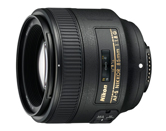
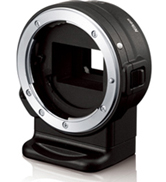
Alongside the J1 & V1 cameras and the four lenses, Nikon have also launched some accessories, the most interesting being the Mount Adaptor FT1, for F-mount lenses.
This adaptor will allow compatibility with an existing collection of Nikkor F-mount lenses to take advantage of the compact and lightweight Nikon 1 cameras.
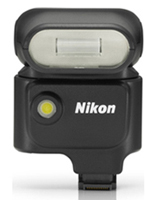
Speedlight SB-N5
- it's powered by the camera and has tilt and swivel functionality
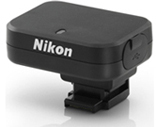
GPS Unit GP-N100
- only compatible with the V1, available in white or black
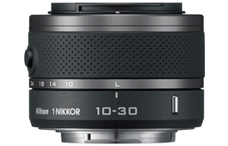
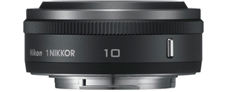
Alongside the launch of the Nikon J1 and V1, they've also released details of the first four lenses available (multiply by 2.7x to get the 35mm equivalent focal length):
After much anticipation, Nikon have finally released details of their entry into the maturing mirrorless, interchangeable lens market with the Nikon 1. It's safe to say they didn't invest much of their product development budget into the branding (although apparently, the name "...came from the idea of developing a completely new camera system that would be a leader in the digital age by starting from nothing, or "0", and giving birth to "1"). Hmmm. Anyway, let's hope the technology is impressive!
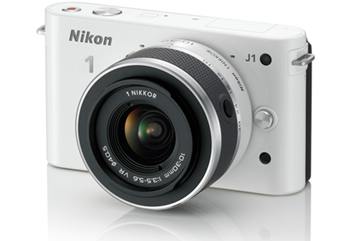
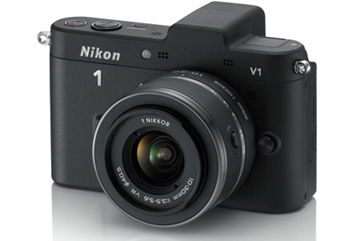
The firs two cameras in the range are titled the J1 and V1:
They both sport a new high-speed CMOS sensor, an EXPEED 3 image processing engine and of course the new lens mount system. The V1 claims to be the lightest camera in its class (for now), with an electronic viewfinder (EVF).
Firmware version 1.1.0 incorporates the following fixes and improvements.
Fixes a phenomenon where the wireless built-in flash settings are reset to defaults when the battery is removed from the camera.
Fixes an intermittent phenomenon where image-rotation information is not recognized correctly when shooting with the camera in the vertical position depending on the timing of the shutter release.
Nikon have launched a new addition to their Nikkor lenses, with a 40mm f/2.8 'micro' lens. It promises to be great for macro work, with a 1:1 reproduction ratio, light weight and near-silent auto-focus.
Highlights:
40 mm DX-format macro lens (FX-format/35mm equivalent:60mm).
Large maximum aperture of f/2.8.
1:1 reproduction ratio offers life-like close-ups.
Closest focusing distance: 0.163 m.
SWM (Silent Wave Motor) for accurate, whisper-quiet autofocus.
Two focus modes: M/A (manual-priority autofocus), allows quick switching between Autofocus and Manual focus operation, and M (manual focus).
Canon have announced a new zoom lens, the EF-S 55-250mm f/4-5.6 IS II, featuring a four-stop image stabiliser. Available seperately, or bundled with the EF-S 18-55mm f/3.5-5.6 IS II when bought with the EOS 550D, 600D, or 60D.
Canon have released new firmware for their 1D Mark IV, now at version 1.1.0. Updates are:
Improves the writing/reading speeds when using UDMA 7-compatible CF cards.
Fixes a phenomenon that occurs when using high-capacity (32 GB or greater) CF cards: If either a CF card with only a little available space remaining or the battery is removed and then reinserted into the camera, and then the user attempts to start shooting movies immediately, shooting may stop.
Corrects some mistakes in the menu screens displayed in Arabic and Portuguese.
Updates are available for Windows and Mac respectively.