So far, I've added photos of my home city, London, UK. Over the coming weeks, I'll start adding wildlife photos too.
Saturday, 4 September 2010
Richard Waters Photography Facebook Page
So far, I've added photos of my home city, London, UK. Over the coming weeks, I'll start adding wildlife photos too.
Thursday, 26 August 2010
Canon News: Clutch of new lenses
- 300mm f/2.8 high-performance super-telephoto lens
- Part of Canon’s acclaimed L series
- Durable, rugged and lightweight
- 4 stop Image Stabilizer
- Enhanced image quality with SWC coating
- 3 IS modes
- Quiet and fast autofocus
- 400mm f/2.8 ultra-high-performance super-telephoto lens
- Part of Canon’s acclaimed L series
- 4 stop Image Stabilizer
- 3 IS modes
- Durable, rugged design
- Enhanced image quality
- Quiet and fast autofocus
- High performance telephoto zoom lens
- Part of Canon’s acclaimed L series
- 4 stop Image Stabilizer
- Two UD elements
- Highly resistant to dust and water
- 8 blade circular aperture
- Quiet & fast autofocus
- Compatible with a tripod collar
1.4x III and 2x III Extenders
- Extends the master lens focal length by 1.4x/ 2.0x
- Outstanding image quality
- Highly resistant to dust and water
- Improved communication between lens and camera
- Optimised lens coatings
- Compatible with L-Series telephoto and telephoto zoom lenses
- Circular or full frame Fisheye zoom lens
- Part of Canon’s acclaimed L series
- Durable and rugged design
- Quiet and fast autofocus
- Full-time manual focusing
- Easier lens cleaning
More details here.
Canon News: EOS 60D released
Features include:
- 18 MP APS-C CMOS sensor
- Advanced creative features
- Vari-angle 7.7cm (3.0”) 3:2 ratio LCD
- Full HD movies
- DIGIC 4
- ISO 100-6400, H:12800
- 5.3fps shooting for up to 58 JPEGs
- 9-point cross type AF System
- iFCL metering with 63-zone Dual-layer Sensor
Unfortunately, it looks like the featureset does NOT include weather-sealing, or a magnesium body (it's plastic). There's also no micro AF lens adjustment, although it's possible it will be included in revised firmware before its launched, as people are rightly kicking-up a fuss that it isn't included.
Sunday, 22 August 2010
Canon News: Trio of compacts released
- HS System and f/2 lens
- High-sensitivity 10.0 MP CCD
- 28 mm wide, 3.8x zoom lens, Hybrid IS
- Lens Control Ring, Full Manual and RAW
- 7.5 cm (3.0") PureColor II G LCD
- HD movies, HDMI
- High Dynamic Range mode
- Smart Auto
- Multi-Aspect Shooting
- Optional Waterproof Case
- 12x, wide-angle (28 mm) lens with IS
- 12.1 MP sensor
- Smart Auto and Easy modes detect 28 scene types
- 7.5 cm (3.0") LCD
- HD movies
- Smart Shutter with Wink Self-Timer
- Shooting modes include Miniature Effect movie
- Hints & Tips
- Full Manual control
- i-Contrast
- 10x optical zoom with IS
- Compact, stylish metal body
- HS System, 10.0 MP CMOS sensor
- Full HD movies, Dynamic IS
- 7.6 cm (3.0") PureColor II G LCD
- Super Slow Motion Movie
- Smart Auto and Smart FE
- Shooting modes, Best Image Selection
- Wink Self-Timer
- Hints & Tips
Thursday, 19 August 2010
Nikon News: new Nikkor lenses
AF-S NIKKOR 85MM F/1.4G
- Fast f/1.4 aperture
- Newly-developed optical system with 10 elements in 9 groups
- Incorporates Nikon’s exclusive anti-reflection Nano Crystal coat, drastically reducing ghosting and flare
- Dedicated Silent Wave Motor (SWM) to ensure quiet and accurate focusing
- Magnesium body and sealing against moisture and dust
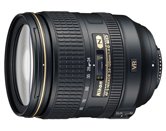
AF-S NIKKOR 24-120MM F/4G ED VR
- 5x zoom lens for FX format D-SLR photographers
- Excellent value and performance in a compact package for adventurous photographers everywhere
- Second generation Vibration Reduction system (VR II)
- Design uses Nano Crystal coat, two ED glass elements and no less than three aspherical lens elements to maintain bright, high contrast images
- Very discreet autofocus performance with instant Manual override possible in M/A mode
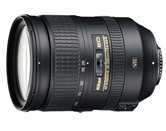
AF-S NIKKOR 28-300MM F/3.5-5.6G ED VR
- Huge 10.7 zoom ratio makes it the ultimate ‘walkabout’ lens.
- Two ED and three aspherical elements to effectively manage the risk of aberrations that can occur with super-zoom lenses
- Second generation Vibration Reduction system (VR II)
- Can focus as close as 50cm at all focal lengths for added flexibility
- The Silent Wave Motor (SWM) was designed specifically to deliver quiet and accurate AF operation across the extended zoom range with intuitive manual override
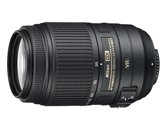
AF-S DX NIKKOR 55-300MM F/4.5-5.6G ED VR
- 5.5 times zoom ratio offers flexibility by drastically extending the telephoto reach
- Incorporates high quality ED and new HRI (High Refractive Index) glass elements to help deliver crisp images, even under harsh lighting conditions.
- Second generation Vibration Reduction system (VR II)
- Weather sealed mount, which prevents moisture and dust infiltrating the lens or camera sensor
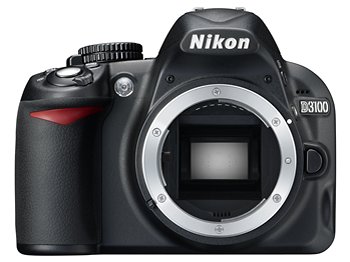
Nikon News: D3100 DSLR launched
- 4.2 megapixel DX-format CMOS image sensor delivers lifelike images with vivid colors, reduced noise and smooth tonal gradations.
- EXPEED 2 image processing engine provides enhanced movie recording, high-sensitivity performance and maximum image quality.
- High ISO (100-3200) light sensitivity - extendable up to 12800: features an Auto ISO setting and is manually extendable up to ISO 12800 using the Hi2 setting. Enables faster shutter speeds, significantly reducing the risk of blurred images when you shoot fast-moving subjects or take pictures in low light.
- GUIDE mode: quick and easy-to-use in-camera assistance. Asks you about the picture you want to take and automatically optimizes settings for superior results. Sample images appear on the display to show you what will happen to your image if you apply the suggested settings.
- D-Movie – full HD (1920 x 1080) movie clips: record beautiful high-definition (HD) movie clips with sound. The camera’s large image sensor and high ISO sensitivity offer exceptional image quality. NIKKOR lenses can be used to obtain cinematic effects and you can make simple edits of your clips in-camera by deleting scenes or saving specific frames as still images.
- Live View with Scene Auto Selector: makes it easy to compose images using the LCD monitor. Scene Auto Selector will select the best mode for the scene and subject you want to capture, and Fulltime servo AF (AF-F) mode keeps subjects in focus without the need to press the shutter release button.
- Large 7.5 cm (3-inch), high-resolution LCD monitor makes it easy to view essential camera information, and a pleasure to review and edit your photos and movies.
- Razor-sharp 11-point Autofocus system offers fast and precise autofocus coverage across the frame. Four AF-area modes, including 3D-tracking AF, deliver sharp results, whether your subject is off-center, moving fast or completely unpredictable.
- Active D-Lighting automatically retains details in highlights and shadows for stunning images with natural contrast.
- Picture Controls lets you set the look and mood of your images before you shoot. Choose from six settings: Standard, Vivid, Neutral, Monochrome, Portrait and Landscape.
- Extensive in-camera editing functions let you edit and enhance images and movies in the camera. Offers techniques such as Red-Eye Correction and Quick Retouch, as well as a range of Filter Effects.
- Dual Integrated dust reduction system: Image Sensor Cleaning and Airflow Control systems keep dust away from the camera’s image sensor for clear, spot-free images.
- Lightweight body and superior ergonomics: a secure grip makes the camera comfortable to handle. Dedicated controls for frequently used functions like Live View, D-Movie and shutter release make it a joy to operate.
Thursday, 22 July 2010
Canon News: Revised firmware for EOS 7D
- Fixes a phenomenon in which the set aperture moves when shooting movies in manual exposure mode using some Canon lenses (such as macro lenses).
- Fixes the AF point-selection behavior of the C.Fn III-7 (Manual AF pt. selec. pattern) custom function when set to [1].
- Fixes the AF point display for the viewfinder electronic level when shooting in the vertical position.
- Corrects misspellings in the Spanish and Thai menus for applicable products.
Wednesday, 7 July 2010
Canon News: Revised firmware for Rebel T2i / 550D and ID Mk IV
Updated firmware available below:
Rebel T21/550D
1D Mark IV
Sunday, 4 July 2010
Microstock News: Crestock acquired by Masterfile Corporation
Friday, 25 June 2010
Microstock News: iStock release iPhone app
More details here.
Tuesday, 22 June 2010
Microstock news: Fotolia launches desktop-based stock photo app
Fotolia have just launched an Adobe AIR desktop widget - allowing you to search and buy stock imagery, video and vectors direct from your PC or Mac.
It's free and easy to install. More information available here.
As well as using this new application or going direct to the microstock site, there is one other way to get your stock imagery - via free Microsoft Office ribbon plugins. Fotolia have one and so do iStockphoto.
Sunday, 20 June 2010
Microstock News: Stockfresh enters the ring!
Sigma news: Potential AF issue with recent zoom lenses
- --- APO 50-500mm F4.5-6.3 DG OS HSM
--- Serial Numbers between 10633051 and 10972000 - --- APO 120-400mm F4.5-5.6 DG OS HSM
--- Serial Numbers between 10574001 and 10972000 - --- APO 150-500mm F5-6.3 DG OS HSM
--- Serial Numbers between 10674301 and 10972000
Microstock news: Getty extends Flickr deal
Tuesday, 25 May 2010
Canon News: 5D Mk II Firmware released v2.0.7
Canon have released a minor firmware update for the full-frame 5D Mk II. It fixes the following:
- Fixes a phenomenon in which the aperture exhibits abnormal movement when shooting movies in manual exposure mode and Aperture Priority AE (Av mode) using some Canon lenses (such as macro lenses).
- Fixes a phenomenon in which the exposure level shown in the LCD panel differs from what is shown in the viewfinder when shooting still images in manual exposure mode.
- Fixes a phenomenon in which the Wireless File Transmitter (WFT-E4 or WFT-E4 II) may not automatically power off when used for FTP transfers.
Saturday, 8 May 2010
Photography - My Top 5
It would be great to hear your views too and the whole point of the exercise is that it doesn't have to be new gear, it might be an exhibition you visited, a book you read, another photographer, etc.
Here's my 'Top 5':
- Visiting Costa Rica. I'd always had a passing interest in photography and enjoyed the outdoors, but it was on a trip to Costa Rica where it all came together so magically. For such a small country, it's crammed with 5% of the globe's biodiversity in it and it's simply breathtaking. I'd recommend an operator like Exodus, where you can more efficiently get around to the key sites and the local guide that supported our trip was exceptional.
- Asking for honest feedback. It's great to hear compliments, but we're probably going to improve more with some honest, constructive feedback. Although there have been plenty of times I've been excited about a shot (usually because of the story behind the shot), it's sometimes good (albeit sometimes painful) to hear what someone who wasn't there thinks!
- Photo magazine subscription. Although there are tons of books that will promise to help improve photography, I find a monthly subscription to a magazine a great way to get regular 'bite-size' chunks of inspiration and guidance. I'd recommend Digital Camera in the UK.
- Wildlife Photographer of the Year. Speaking of books, if I can't make the exhibition, I'll always hope that Father Christmas gets me the hardback 'Wildlife Photographer of the Year' book. It's the world's best wildlife photography competition and the winning photos are incredible (except if it's a wolf in sheep's clothing!).
- Other people's photos. Obvious enough, but before I head anywhere or snap a particular subject, I always check out Flickr to see what other people have done. Not to copy directly, but to inspire me.
Tuesday, 4 May 2010
Microstock: A guide to a simple workflow
- Take great photos (the really hard bit!), ideally with perfect composition, commericial content and great light. Definitely take in RAW format and with as low an ISO as possible.
- Download photos to a computer and get ready to do the RAW conversion and then any editing. I use Adobe Photoshop Elements 6.0, but for those with more generous budgets, Adobe have other products available:
- Do any necessary editing, which may include:
- Cropping, straightening horizons and adjusting perspective
- Removing any copyright/trademarks
- Adding layers to adjust levels, saturation, etc.
- Zooming in, then using the healing tools to remove spot marks
- Sharpening
- [adding keywords and captions, if possible - it isn't in Photoshop Elements 6.0 -grrr!]
- Saving as a .jpg at the highest image quality
- To help think about suitable keywords (essential otherwise buyers wont find your great photos), there are a couple of tools out there which can help. I use the excellent tool developed by Yuri Arcurs, the legendary microstocker.
- Rather than add keywords at each site individually, it saves a load of time to do this before submission. I use Geosetter for this, if you can't do it in your editing software
- Now for uploading... I use two approaches:
- For iStockphoto, I use Deepmeta
- For all the other sites (Shutterstock, Dreamstime, DepositPhotos, etc.), I upload by ftp, using Filezilla; then, on each site, find the files, add categories, submit and cross your fingers
Monday, 3 May 2010
Professional Photographers - a new business strategy?
What is Microstock?
Microstock is the business model of selling multiple copies of the same image at a price lower than traditional rights-managed images. That doesn't necessarily mean they're of a lower quality. It's a great response to a changing environment. I am one these 'evil' microstock contributors - my portfolios can be viewed at various sites such as iStock, Shutterstock and Dreamstime.
What is a 'SWOT' Analysis?
A SWOT analysis is a simple way to help you analysis the strengths and weaknesses of your business, as well as the external threats and opportunities within which you operate. Using a simple template (example), you can construct one for your own business, but below is some generic analysis about microstock. The aim is to turn the threat of microstock into an opportunity; and your weaknesses into additional strengths.
THREAT - lower 'barriers to entry'
It is essential, as any business should, that it reviews, understands and if necessary, adopts or adapts to the changing external environment. And the major change for photographers is with the advent of digital, the 'barriers to entry' have been demolished. This may be perceived as a threat to some of the traditional ways professional photographers may have made their living. Here are some examples of what's changed:
- Professional level quality images can be taken using prosumer-grade cameras (and cameras are now better, e.g. image stabilisation, better low-light performance, etc.)
- The cost of storage space has fallen
- High-power post processing techniques are available in consumer software
- The internet has meant the marketplace is now global in reach - marketing is cheaper and exclusive relationships are less relevant
- Web 2.0 (Facebook, Twitter, etc.) promotes a virtual community of friends, fans and followers
All of this means, it's much, much easier for anyone to enter the photography industry. And this isn't going to change in a hurry. So it's time to get used to a marketplace with a greater supply of images.
OPPORTUNITIES?
Hang on a minute though, if we have a careful look at the 'doom and gloom' above, we might notice several opportunities which you might be able to exploit:
- With better kit, can you now take higher-quality photographs than you used to?
- The marketplace is now global, not just local/regional/national. And as the cost for others to publish reduces (e.g. via blogs), demand for cheap imagery will continue to sky-rocket
- There are new photographers entering the market - what have you got which could help them? (see strengths below)
- You can benefit from lower costs of storage and processing too
- You could use Web 2.0 to find out a lot more about opportunities to sell your services?
STRENGTHS?
Which strengths do you posses, which new entrants to your market do not posses? Well, quite a few I'd expect:
- You're good, possibly exceptional, at photography. That comes with many years of experience and can't be recreated easily
- You have a huge library of images - a ready-made marketing portfolio
- You know other professional photographers
- You have a load of valuable equipment such as lenses, probably out of financial reach of the new entrants
- You may be well-known and have a great reputation in your particular field
- Depending on your area of focus, you're probably a patient person and a perfectionist
WEAKNESSES
That's for you to think about. But I bet you can get around them!
What now?
You have four choices - denial, adopt, adapt, or a combination of adopt and adapt.
1.) Denial
Some are hoping that the new industry will just go away, or it's a minor, irrelevant, irritant. And some choose to cast microstock in a poor light (example). History would suggest this tactic will not last forever (e.g. the music industry denying digital downloads will be successful; .the US car industry not seeing a threat from the Japanese).
2.) Adopt
Why not join microstock? Rather than replace your existing work, perhaps it can compliment it? And if you think the quality of microstock is so poor, check out iStock's Vetta Collection for some reassurance. I'd also recommend Shutterstock as a site to consider signing-up to - with a royalty-free contract, you can sign-up to as many sites as you wish (although going exclusive may pay higher commissions).
3.) Adapt
Can you adapt the way you make money from photography to exploit the changing industry dynamic? Of course you can - here are some examples:
- Hire my equipment out to local microstock photographers
- Teach local microstock photographers how to be better
- Use the Web 2.0 technologies to market my existing business and find new opportunities
- Upgrade to the latest equipment allowing better use of low-light and new techniques in post-processing (e.g. HDR)
See 2 and 3 above.
Summary
We're living in very exciting times - never before has the photography industry been under such seismic shifts in demand and supply. That isn't a threat - it's an opportunity.
What do you think?
Tuesday, 27 April 2010
Nikon News: new 200–400mm f/4G ED VR II lens
Versatile super-telephoto zoom lens
Powerful super-telephoto zoom lens that’s perfect for sports and wildlife shooting offering constant maximum aperture and VR II Image Stabilization.Nikon VR II (Vibration Reduction) Image Stabilization
Vibration Reduction, engineered specifically for each VR NIKKOR lens, enables handheld shooting at up to 4 shutter speeds slower than would otherwise be possible, assuring dramatically sharper still images and video capture.Nano Crystal Coat
Further reduces ghosting and interior flare across a wide range of wavelengths for even greater image clarity.4 Extra-low Dispersion (ED) Elements
Offers superior sharpness and color correction by effectively minimizing chromatic aberration, even at the widest aperture settings.Three Focus Modes
A/M mode joins the familiar M/A and M modes, enhancing AF control versatility with fast, secure switching between auto and manual focus to accommodate personal shooting techniques.Internal Focus (IF)
Provides fast and quiet autofocus without changing the length of the lens, retaining working distance throughout the focus range.Exclusive Nikon Silent Wave Motor (SWM)
Enables fast, accurate and quiet autofocus.Nikon Super Integrated Coating (SIC)
Enhances light transmission efficiency and offers superior color consistency and reduced flare.Rugged Construction
Featuring enhanced dust and moisture-resistance, magnesium die-cast barrel construction and a protective meniscus front lens.Close Auto Focusing to 6.6 feet at all focal lengths
Focus to 6.6 feet using AF or 6.4 feet using manual focus enabling striking image perspectives.Rounded 9-Blade Diaphragm
Renders more natural appearance of out-of-focus image areas.Compatible with TC-14EII (AF/MF), TC-17EII (MF), TC-20EII (MF) and TC-20EIII (MF) Teleconverters.
More details available here.
What (and when) will Canon respond with...?
Thursday, 15 April 2010
Canon News: EOS 7D Firmware 1.2.1 released
- Extends the timing at which the high temperature warning indicator is displayed and the timing of automatic shut down of the camera due to a rise in internal temperature during Live View or EOS Movie functions.
- Optimizes program shift when the ISO setting of the camera is set to AUTO.
- Corrects a misspelling in the French-language menu.
- Corrects a phenomenon in which vertical magenta-colored banding appears in still images taken in movie-shooting mode.
(This only occurs when in Manual exposure mode and when the ISO speed is set to "H". Note that this phenomenon only affects units with Firmware Version 1.2.0)